
Industry estimates of freight invoice error rates range from 5% to 25%, with most going undetected until after payment. In an industry built on timing and coordination, that’s a significant problem.
Part of the reason is structural. In logistics, invoices rarely arrive in an organized way. They come in by email, supplier portal, scanned PDF, and the occasional spreadsheet attachment, often tied to shipments already in transit and services already delivered. By the time finance sees them, the operational clock has already been ticking.
That gap, between when a charge is incurred and when it’s processed, is where accuracy and cash flow start to slip. It’s also why accounts payable (AP) automation has quietly become one of the more important investments a logistics business can make.
Why AP automation matters now
As logistics networks expand across regions and transportation modes, invoice complexity grows with them. Volumes rise. Supplier bases widen. Billing structures vary by carrier, country, and contract. At the same time, expectations for financial visibility continue to increase.
Three pressures are driving this shift:
- Volume: More shipments mean more invoices. Manual processes that may work at 1,000 invoices a month become increasingly difficult to scale to 50,000 without adding either headcount or risk.
- Complexity: Global networks bring more formats, more currencies, and more carrier-specific billing structures. Every new lane or partner adds variation that someone has to interpret.
- Visibility: Finance leaders are increasingly expected to answer questions about spend, accruals, and exposure in real time rather than at month-end close.
Without automation, these pressures compound. Processes slow, errors increase, and confidence in the numbers becomes harder to maintain.
Why generic AP tools fall short
Most organizations have tried to address this with one of two approaches: shared service centers or off-the-shelf AP automation. Both standardize work. Neither was designed specifically for logistics.
Shared service models often separate finance from the activity generating the charges. Invoices move through centralized queues that don’t reflect shipment urgency, carrier disputes, or operational priorities. Standardization improves control, but at the cost of responsiveness.
Generic AP tools tend to treat invoices as static accounting records — documents to be coded and paid. A freight invoice isn’t static. It’s tied to a shipment, a contract, and often a discrepancy that only the operations team can resolve. When the tool doesn’t understand the context, the work still ends up routed back to humans.
The result is a growing gap between what operations sees and what finance processes. That gap is where overcharges, missed deadlines, and strained vendor relationships tend to live.

What “built for logistics” actually means
Effective AP automation in this industry isn’t just faster data entry. It’s a system that mirrors how logistics teams actually work.
That means invoices are visible alongside the shipment documents they relate to — bills of lading, airway bills, customs paperwork — so charges can be validated against what was actually shipped. Disputes can be raised directly against an invoice, with the vendor notified automatically and the response tracked centrally. Accruals are comparable across shipments, currencies, and line items, so recurring discrepancies surface early rather than late.
When the workspace reflects the work, resolution replaces searching.
What AP automation enables for finance
For finance teams, the meaningful benefit is not just speed. It’s control at scale.
A single logistics invoice can take 5 to 30 minutes to process manually. Across thousands of shipments a month, that adds up quickly, and the inefficiency becomes structural rather than effort-based. Adding hours to the day doesn’t fix it.
Modern AP automation introduces defined workflows from intake to posting. Routing can reflect real organizational structures — by role, branch, or region — rather than generic queues. Approval rules adapt to volume and team size. Due dates surface on their own instead of being buried under newer messages.
With a centralized view of invoice status and performance, finance leaders can see where work is piling up, where delays occur, and where the process can improve.
What AP automation enables for operations
Operations teams experience AP friction differently. Payment uncertainty complicates cash flow management. Overbilling patterns are difficult to detect. Manual data handling increases risk. Fragmented systems slow consolidation.
When AP automation aligns with operational workflows, it stops being a separate function and starts being a shared system of record. Urgent invoices rise to the top. Matching against accruals highlights recurring discrepancies. Approval thresholds reinforce policy without requiring extra coordination.
Instead of working around finance, operations gains visibility into what’s happening inside it.
The role of intelligent capture
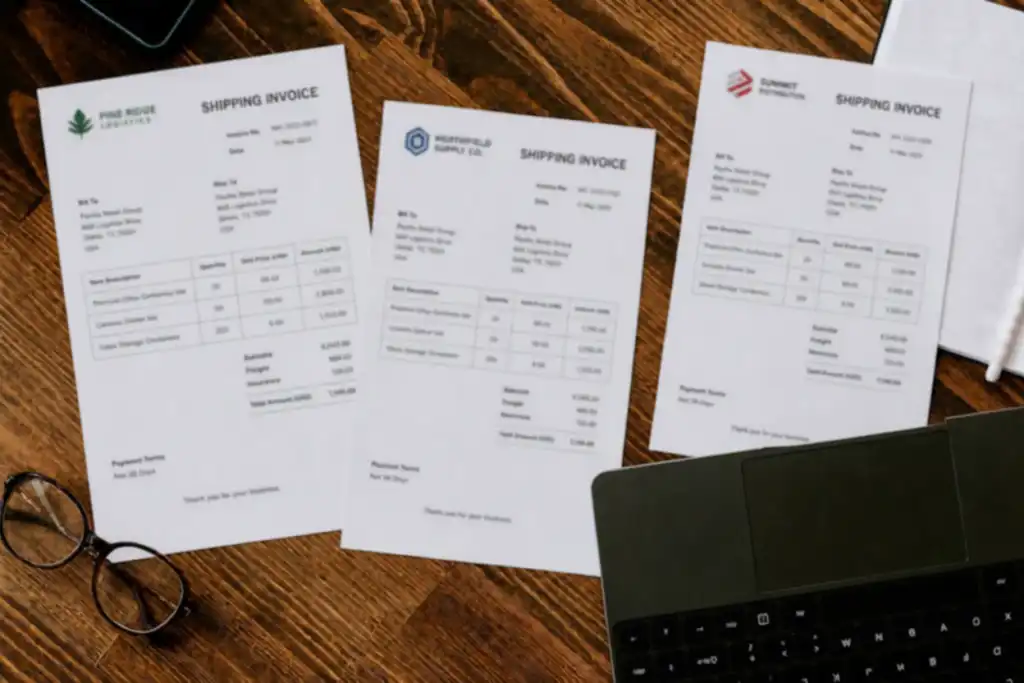
Modern AP automation doesn’t rely on humans keying data into forms. It uses AI trained on logistics-specific formats (freight bills, customs paperwork, carrier-specific invoice layouts) to automatically extract data from emails, PDFs, and attachments. Once captured, invoices match against accruals and business rules without manual intervention.
Real-time visibility ties it together. Invoice status, accruals, payments, and discrepancies update as they happen, with a full audit trail underneath for compliance and reporting.
The point isn’t to force teams into rigid templates. It’s to give existing workflows the consistency and control they’ve often been missing.
What comes next for logistics AP
The traditional framing of accounts payable as a back-office function is becoming harder to defend. In modern logistics, invoice handling is closely connected to shipment activity, vendor performance, and cash position.
AP automation is one of the clearer expressions of that shift. It reduces manual work, but the more lasting value is in what it enables: better visibility, faster resolution, and a financial picture that keeps pace with operations rather than trailing behind them. Finance stops being a function that reports on the business after the fact and starts being one that informs decisions as they’re made. The work gets faster, but more importantly, it gets more accurate and more useful.
That’s the quieter shift underneath AP automation, and it’s why the conversation is moving beyond efficiency into something closer to operational intelligence.
For logistics businesses operating at scale, the move from chasing the work to staying ahead of it is what makes AP automation worth the investment.