
TPM26 brought together leaders from across global logistics to discuss the forces shaping trade, transportation, and supply chains. From shifting trade routes to new approaches for data sharing and operational coordination, the conversations reflected how quickly logistics networks are evolving.
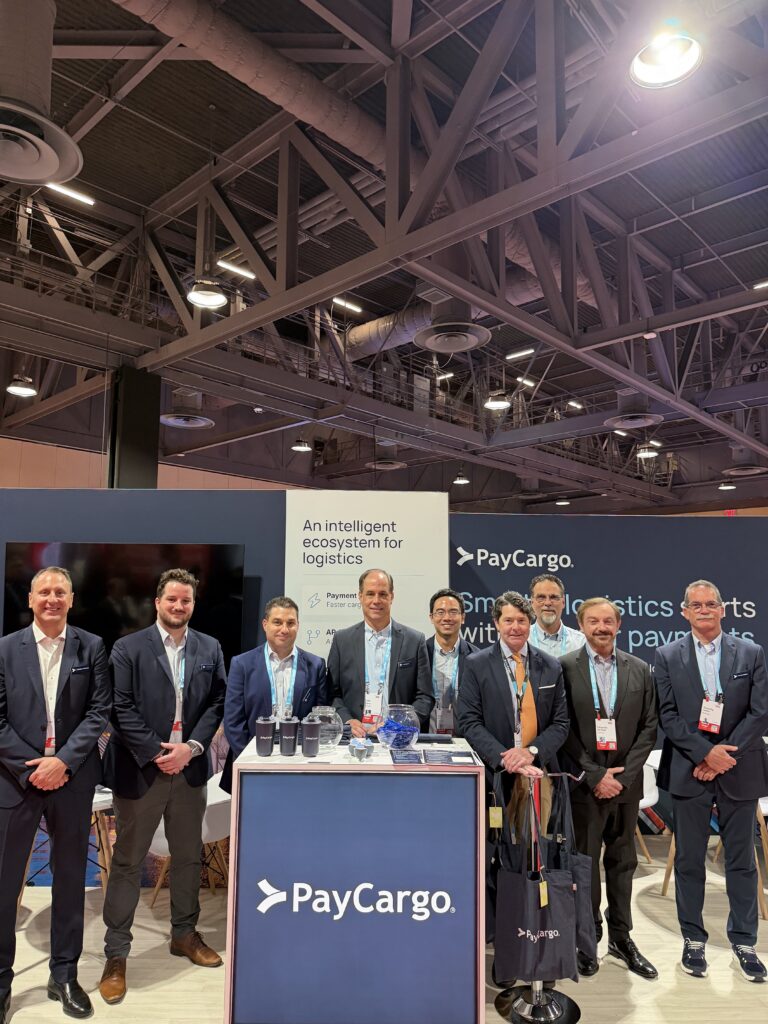
Members of the PayCargo leadership and commercial teams spent the week meeting with carriers, forwarders, terminals, and technology providers across the event. These discussions included Eduardo Del Riego, President and CEO of PayCargo; Dennis Monts, President and COO of PayCargo Labs; Christian Schwarz, Executive Vice President of Sales; Timothy Walton, Senior Vice President of Sales; Todd Pigeon, Vice President of Sales; and members of the commercial team including Anthony Aulisio, Simon Michael, and Ling Ho.
Across panels, executive interviews, and conversations throughout TPM, several themes stood out. Many point toward a broader shift in how logistics systems operate — moving from disconnected processes toward environments where data, financial workflows, and cargo movement operate together in real time.
Execution matters more than visibility
One discussion during TPM Tech highlighted a growing realization across the industry: visibility alone is no longer enough.
For years, logistics platforms have focused on tracking events such as gate-in times, vessel departures, arrival notices, and delivery confirmations. These systems improved awareness across complex supply chains.
But awareness does not always lead to action.
In the TPM Tech session “Visibility-as-a-Transaction: Paying for the Events That Matter,” Dennis Monts joined industry leaders to explore how operational milestones and financial settlement may become more closely connected.
The idea is simple. When verified supply chain events generate trusted data and financial confirmation, the next step in the workflow can happen immediately.
Instead of waiting for manual payment verification, cargo release and financial settlement can occur simultaneously. When those processes move in sync, the pause between “cargo is ready” and “cargo can move” begins to disappear.
Cargo moves in real time — money often does not
Another theme that surfaced throughout TPM was the timing gap between physical cargo movement and the financial processes that support it.
Containers can move from vessel to terminal within hours. Yet the payment confirmation tied to those movements — invoice approval, settlement, or release authorization — often takes much longer.
That disconnect creates friction at critical points in the supply chain.
As PayCargo CEO Eduardo Del Riego discussed during conversations at the event, cargo may be ready to move, but unpaid charges or delayed payment confirmation can still prevent a truck from completing its mission.
In many cases, the issue is not congestion or documentation. It is simply that a required charge has not yet been settled.
As supply chains become faster and inventory buffers shrink, these financial delays become more significant. Demurrage rules are stricter, regulatory scrutiny around billing has increased, and logistics organizations must manage more detailed documentation requirements.
In this environment, the speed and reliability of financial workflows directly affect operational performance.
Logistics networks are constantly adapting
Several sessions at TPM also highlighted how global logistics networks continue to adapt to changing trade patterns, regulatory shifts, and evolving production hubs.
One discussion on air cargo markets explored how policy changes are beginning to reshape regional freight flows. As some trade lanes shift, Southeast Asian markets such as Vietnam, Taiwan, and Thailand are seeing growing demand tied to electronics, industrial components, and semiconductor supply chains.
Airlines have already begun adjusting freighter capacity to serve these markets. At the same time, many exports still move through established transshipment hubs such as Hong Kong, Japan, and South Korea.
While the conversation focused on air cargo, it reflected a broader reality discussed across the conference: logistics networks must constantly adjust to economic pressure, policy changes, and shifting production patterns.
For logistics providers, this increases the need for systems that allow organizations to respond quickly — supported by accurate data, connected workflows, and reliable financial processes.
Connecting cargo, data, and financial workflows
Another message repeated throughout TPM was that modern supply chains generate enormous amounts of information, but information alone does not move cargo.
Over the past decade, logistics organizations have invested heavily in dashboards, tracking tools, and analytics platforms designed to improve visibility. These systems provide insight, but they do not always trigger action.
Execution happens when operational systems and financial systems work together.
When billing, payment confirmation, cargo release, and reconciliation are tied to verified supply chain events, organizations can reduce manual intervention and eliminate delays that often occur at key handoff points.
In these environments, systems trigger the next step in the workflow automatically — allowing logistics teams to move from observation to execution.
Smarter logistics starts with smarter payments
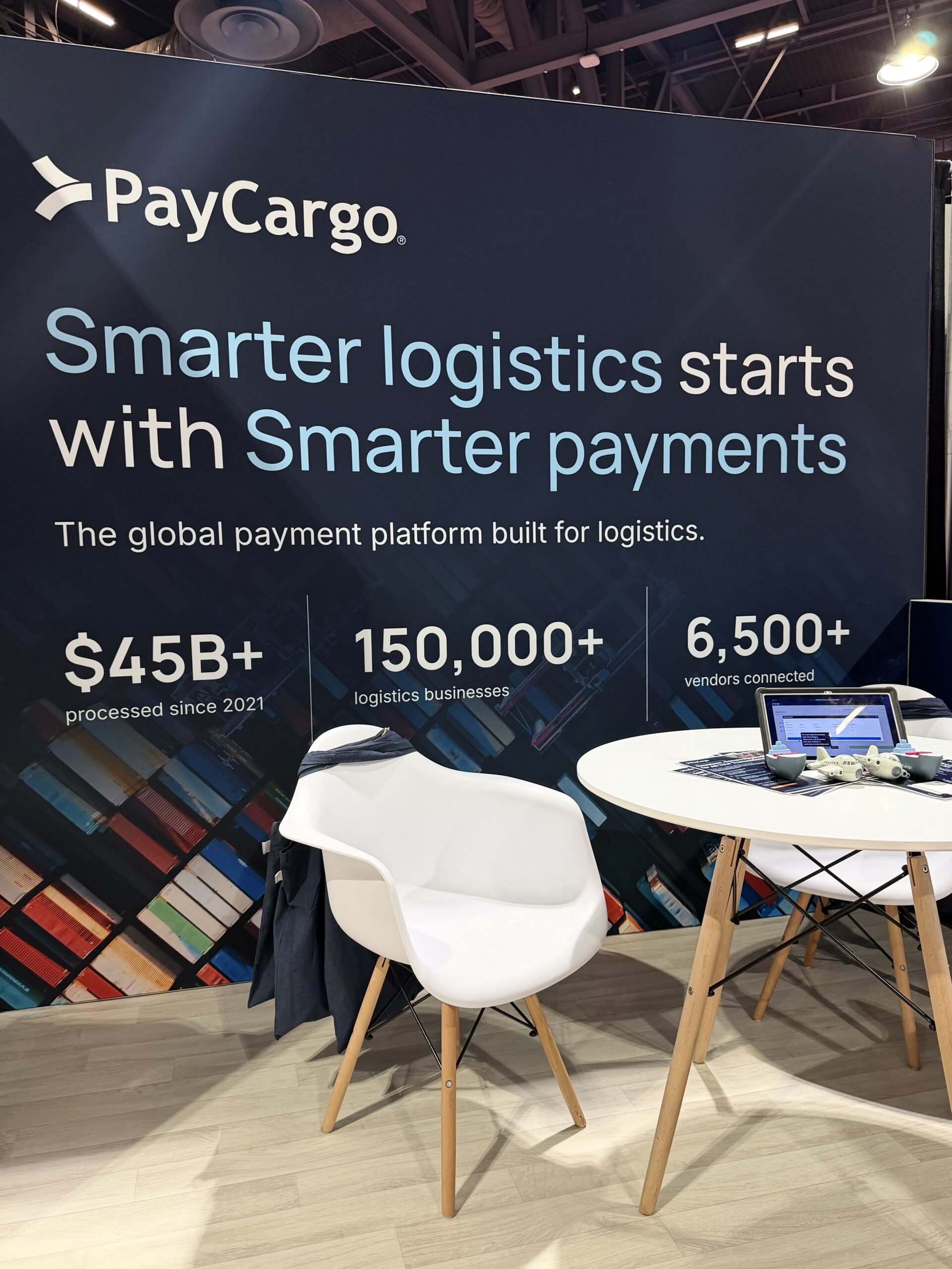
Throughout the event, conversations at the PayCargo booth often returned to a simple idea: smarter logistics starts with smarter payments.
Global logistics depends on systems that work together. Yet many financial processes across the industry remain fragmented or manual. When payment confirmations are delayed, cargo movement slows down.
PayCargo helps simplify these workflows by connecting payments, transaction visibility, and automated processes within a platform designed specifically for logistics.
Today, the PayCargo Network includes:
- 150,000+ logistics businesses
- 6,500+ connected vendors
- 100% of global ocean carriers
- More than $45 billion in payments processed since 2021
By linking financial workflows directly to operational milestones, the platform helps carriers, terminals, forwarders, and logistics providers coordinate more efficiently and reduce delays across the supply chain.
Looking ahead
TPM has long served as a place for the industry to examine where global logistics is heading. This year’s discussions reinforced how supply chains are evolving toward systems that are more connected, more automated, and more responsive to real-world conditions.
The organizations that adapt most successfully will be those that align cargo movement, financial workflows, and operational data within the same environment.
In modern supply chains, the movement of goods, information, and funds must happen together.
And increasingly, the systems that enable those connections will define how efficiently global trade operates in the years ahead.