
Image Source: Fred Guerdin E-COMMERCE FORUM
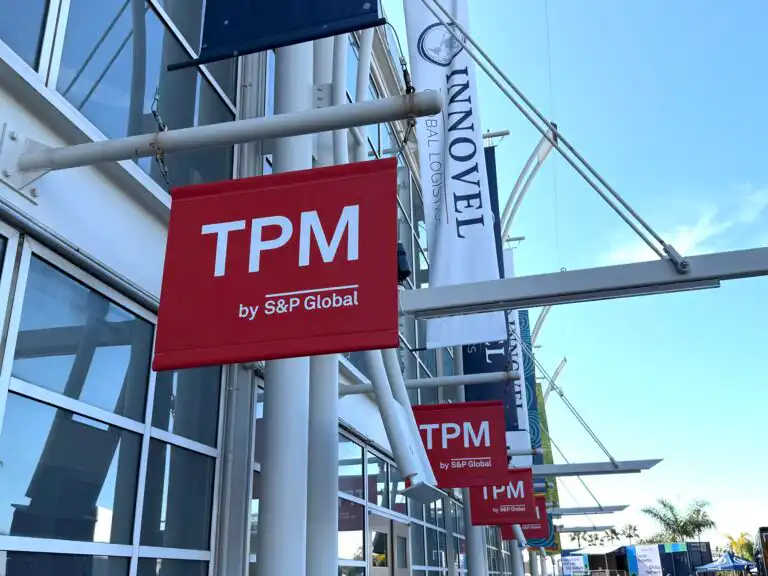
PayCargo was on the ground in Liège for the 2026 EU Cross-Border E-commerce Forum (EU-CBEC), hosted at the Palais des Congrès by Liège Airport (LGG) and the Wallonia Export-Investment Agency (AWEX). It was two days of strong conversations, informative panels, and a clear direction on where cross-border e-commerce and air cargo are heading.
Three insights stood out, and they’re shaping how PayCargo is thinking about the road ahead for e-commerce, air cargo, and customs.
1. The EU’s new low-value customs duty is redirecting trade, not collapsing it
The overarching theme of the forum was the EU’s removal of its duty exemption on low-value goods: as of July 2026, member states introduced a €3 customs duty per item on e-commerce parcels valued below €150, aimed at leveling the playing field as low-cost, high-volume platforms flooded the market with duty-free imports.
The effects are showing up fast in the data. China/Hong Kong–Europe freighter capacity fell sharply between June and August, with Budapest down 58%, Liège down 35%, and Schiphol down 28%. Ryan Keyrouse of data company Rotate presented in Liège and named Budapest, Liège, Urumqi, and Hong Kong as the e-commerce gateways where the declines are most concentrated. Liège Airport itself reported e-commerce parcel volumes down 24% year-over-year, with customs declarations down 52% — though total cargo tonnage was still up 4% on the strength of pharma, data center equipment, and flowers.
Keyrouse’s data also points to something more nuanced than a straight decline. US and Brazilian e-commerce volumes have already recovered after similar changes to their low-value import exemptions, and global e-commerce air cargo volumes in July 2026 were still 23% higher than two years prior. So, the demand hasn’t disappeared; it’s being redirected to wherever the rules are least restrictive.
2. Reaction speed has become the operative question for air freight
Panelists described a shift in the cadence of disruption: where a trend used to move meaningful volume once every four or five months, forum discussion suggested that new demand shifts and capacity reallocations are now happening every two to three weeks. This was raised as a panel observation rather than a hard data point, but the carrier response backs it up — within a single month, Air China Cargo cut 25 weekly flights to Europe, bringing its total to 35 per week, while China Central Airlines reduced its schedule from 30 to 20 flights and CMA CGM cut from 12 to 3.
France offered a preview of what’s coming EU-wide: volumes there fell 30% in March when it introduced its own charge ahead of the EU levy, deepening to a 64% decline by July. And the regulatory pressure isn’t finished — a separate €2 per-consignment handling fee takes effect November 1, 2026, bridging to the EU Customs Data Hub in 2028, with individual member states layering on their own fees in the meantime. For forwarders and carriers on Far East–Europe lanes, planning around stable, predictable flows is no longer realistic.
3. E-commerce and AI cargo, once air freight’s two growth engines, are pulling apart
For years, e-commerce and AI/data center buildout drove air cargo growth together. That’s no longer the case. As one vertical loses ground in Europe, the other is pulling capacity toward the US.
Maarten Wormer of Aevean presented the numbers: US-bound, data center-related air imports rose 103% year-over-year over the first seven months of 2026, reaching 107,000 tons in July — roughly 1,000 freighter flights. Within that, servers were up 181%, network equipment up 130%, and computer components up 86%. Overall air cargo demand was up 5.8% year-to-date, led by Asia Pacific–North America lanes (+24%), while Asia Pacific–Europe grew just 4%.
The pattern holds at the country level. Asia–US demand is leaning heavily on AI-related exports out of Taiwan, South Korea’s load factors to the US are running near 90%, and Taiwan, South Korea, Malaysia, Thailand, and Singapore are now among the tightest airfreight markets globally — even as ex-China–US demand stays soft. It’s the same divergence in miniature: one vertical redirecting, one accelerating, and both demanding a level of agility the industry is still adjusting to.

PayCargo thanks the EU CBEC and AWEX teams for a well-organized forum, and the wider community of attendees for their perspectives throughout the event.
Meet PayCargo at a future event.