Background
For this Denmark-based logistics provider, handling 100,000 road bookings a month across Europe came with a hidden cost: as volumes scaled, a significant share of that demand arrived as unstructured email requests rather than through structured systems, creating a growing manual burden on the operations team.
10-15s
average booking time, down from 6-8 minutes
72%
of bookings fully automated, improving with every booking
20,000
hours of labor recovered annually
€250k
estimated annual cost savings
Challenge: A hard scalability wall as bookings doubled
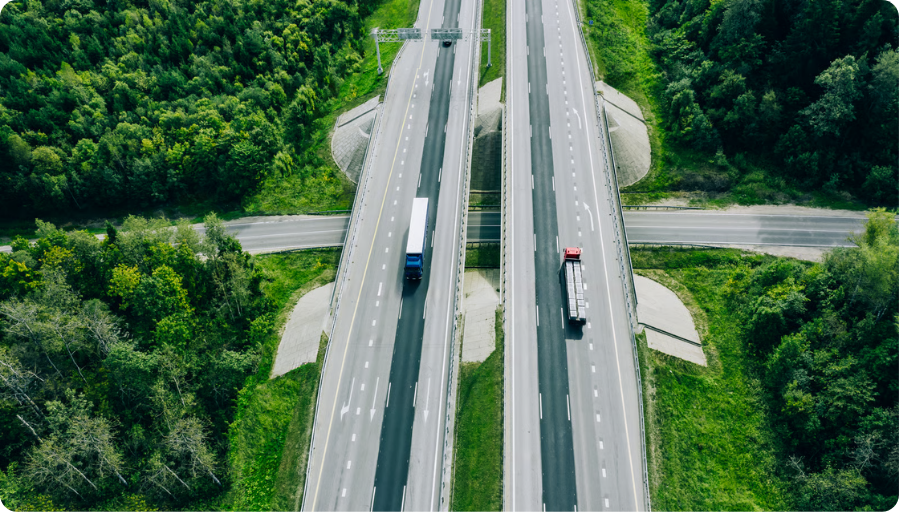
The freight forwarder faced a hard scalability wall: 100,000 road bookings a month, set to double within 12 months. While 40% arrived via EDI, the remaining 50,000 came as unstructured email requests. A dedicated team of 35 staff manually interpreted each email and its attachments, reading weights, measures, origins and destinations, then keyed every booking into the company’s proprietary Transport Management System (TMS).
At 6–8 minutes per booking, around 70 per person each day, the manual model added delays across the supply chain and raised the risk of data-entry errors with downstream effects on customs compliance and carrier coordination. The central question: how do you double volume without doubling the headcount?
Solution: Booking Automation — Processing higher volumes, faster
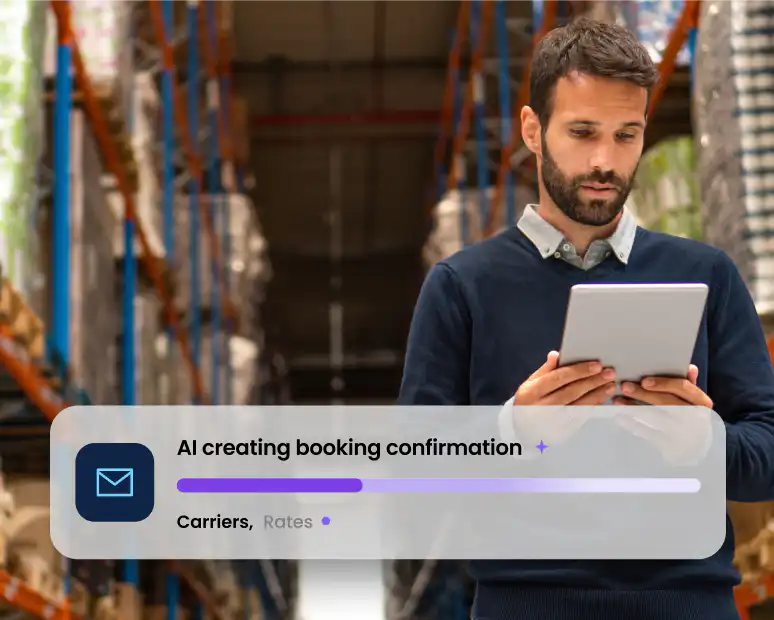
In partnership with PayCargo, the forwarder launched an email-to-booking automation initiative powered by PayCargo Intelligence, PayCargo’s AI platform trained on millions of logistics documents. A large language model (LLM) reads the unstructured content of inbound emails across diverse formats and translates it into consistent, validated bookings, enhanced with established data techniques and synchronized to the global TMS in real time via API.
- Automated extraction: The team no longer retypes booking details by hand. Inbound emails and attachments are handled automatically, giving back hours that used to disappear into data entry
- Real-time synchronization: Bookings now post directly into the forwarder’s TMS once validated, so the whole network sees shipments as they happen instead of waiting on manual updates
- Fewer manual touchpoints: With routine data entry handled, the 35-person operations team now spends its time on planning and customer service
- Fewer data errors: Structured, consistent booking data means far fewer errors slipping into customs and carrier coordination
Result: 72% of bookings fully automated
Measured results:
- 10-15s average booking time, down from 6–8 minutes
- 72% of bookings fully automated, improving with every booking
- 20,000 hours of labor recovered annually
- €250k estimated annual cost savings
Strategic Outcome:
By processing the majority of bookings automatically, the forwarder created a scalable growth engine, reallocating staff to proactive customer service and complex logistics planning. The result: greater shipment density and revenue without expanding administrative headcount, securing a stronger competitive position in the global market.